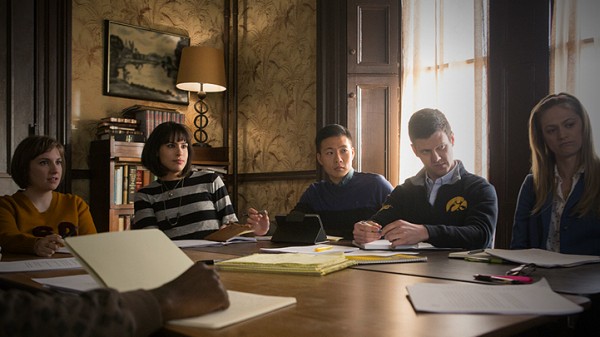
Writer/director Lena Dunham’s series Girls returned with all new episodes for its fourth season on Sunday, January 11th. Only two episodes into the series, Dunham, known for her introspective writing style and sense of humor, not only shows us that this season of Girls will be better than the last, but also that the medium of television and film are necessary tools of expression. In the second episode of this season, Dunham’s character Hannah attends her first writer’s workshop at the University of Iowa. When she reads from her piece “Contact,” she receives major criticism from her peers. The criticism focuses on Hannah’s voice as a writer and how her writing always pertains to her real life. One particular member of the workshop, played by Desiree Akhavan, wonders aloud how any one could possibly critique the work of that kind of writer.
Akhavan’s character’s wonder is hilarious and ironic in that Akhavan herself writes in a similar fashion to Dunham and her film, Appropriate Behavior, actually lead some to call her the “new Lena Dunham.” Dunham more than likely has Akhavan’s character deliver that line specifically because both writers write through their personal experiences and as a means to poke fun at the media’s constant critique and assumptions about her writing. Dunham of course has never shied away from the notion that she writes based on personal experiences and it is incredibly clear that she bases the character of Hannah off of herself. What Dunham is poking fun of in this scene is how quick people are to assume the connection between herself and her character.
Indeed Akhavan’s character goes on to say that in the short moments of interaction she shared with Hannah the previous day, she could honestly say that Hannah and the character in her story, Anna, are one in the same. The viewer is supposed to laugh and seriously ponder this sentiment because we witnessed their very brief, earlier interaction and because Dunham is intentionally poking fun at the way that everyone looks at the work she puts out into the world.
Dunham uses Girls to respond to criticism about her work in a widespread fashion that one can only accomplish through the mediums of television and film. Reaching a large audience is ultimately the only way Dunham can address the assumptions and parallels people make between Hannah and herself and the only way in which she can poke fun of herself as well. In a very clever way, Hannah’s parallels to Anna in this scene reflect Dunham’s parallels to Hannah in reality whilst simultaneously asking her audience “What’s wrong with that?” in a non-confrontational way.